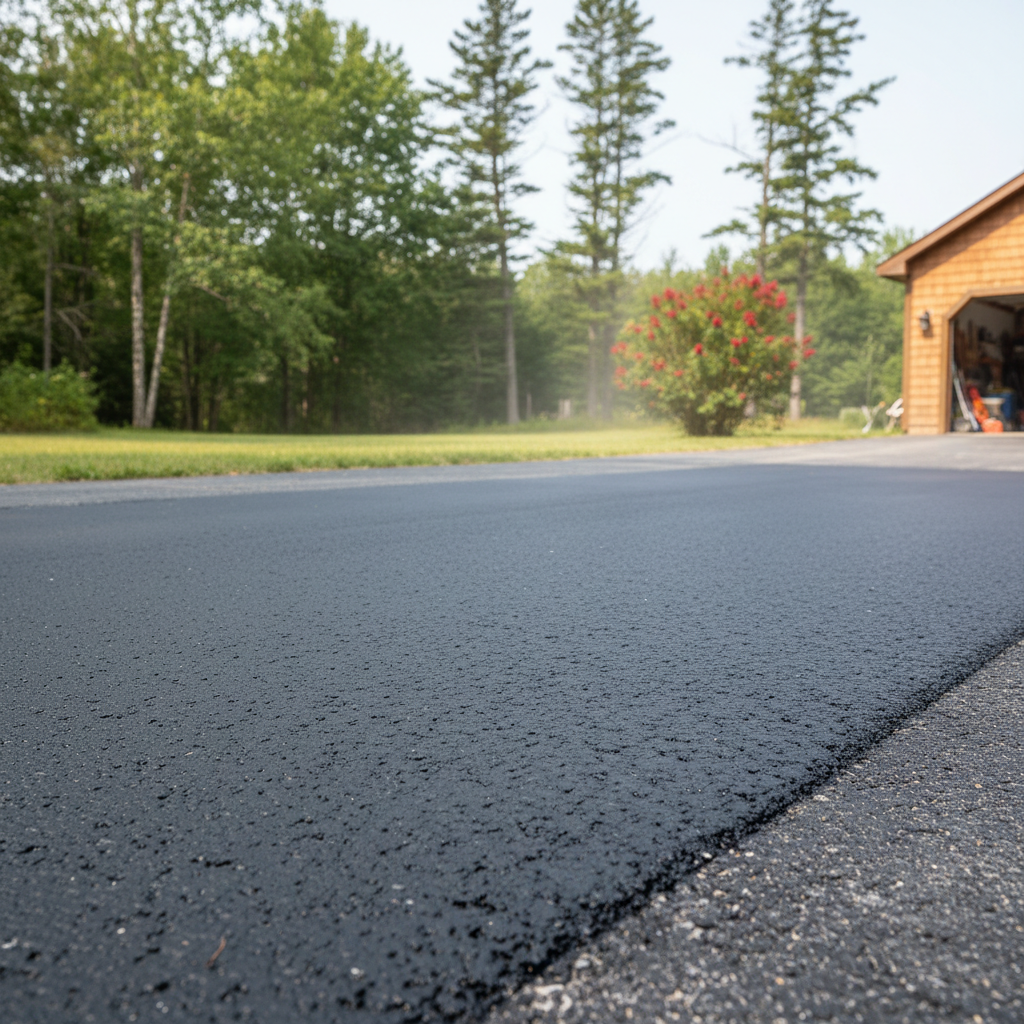
Your driveway's seen better days, huh? Maybe it's got some spiderweb cracks spreading out, or a pothole that's getting deeper every winter. I get calls about this stuff all the time from folks right here in Morrisonville. It's usually the same few questions, so I figured I'd lay it all out for you. No fancy talk, just what you need to know about getting your asphalt fixed up right.
What's the difference between patching and sealing? Do I need both?
This is a big one. Think of patching like putting a band-aid on a cut, and sealing like moisturizing your skin to prevent future cuts. Patching tackles active damage – things like potholes, deep cracks, or spots where the asphalt has actually broken apart and needs to be filled in and compacted. Basically, we're fixing structural issues.
Sealing, on the other hand, is all about prevention. It's a liquid coating that goes over your entire driveway. This protects the asphalt from UV rays, keeps water from seeping in, and guards against chemicals like oil and gas. Plus, it gives your driveway a nice, dark, uniform look. You absolutely need both, but at different times. You patch first to fix any existing problems, then you seal to protect those repairs and the rest of your driveway. You wouldn't seal over a big pothole, right? That would just be a waste of time and money. Fix it, then protect it.
How long does asphalt repair usually take?
That really depends on how bad the damage is. A few small cracks and a minor pothole? We can often get that done in just a few hours, maybe half a day. If significant sections of your driveway are crumbling, or you've got multiple large potholes, it could easily be a full day's work, sometimes even more if we're dealing with extensive sub-base issues. We're not just throwing some asphalt in there; we're cutting out the bad sections, prepping the base, applying new material, and compacting it properly. The weather also plays a role, of course. We can't do this work in the rain or when it's too cold, so sometimes we have to schedule around Mother Nature. Once the repair is done, you'll usually need to stay off it for at least 24-48 hours to let it cure properly, sometimes longer for heavier vehicles.
What causes asphalt driveways to break down so quickly here in Morrisonville?
Oh, man, where do I even start? Our climate up here in Morrisonville is brutal on asphalt. You've got the freeze-thaw cycles, right? Water gets into tiny cracks, freezes, expands, and then thaws, leaving bigger cracks. Do that over and over, and you've got potholes. Then there's all the heavy snow we get, and all the plowing and salting. Salt is particularly harsh on asphalt, breaking down the binder that holds everything together. We also see a lot of clay soil around here, especially in some of the older neighborhoods closer to the river. If the original sub-base wasn't properly prepared for that kind of soil, it can shift and settle, leading to cracks and dips in the asphalt above it. Plus, sunlight, oil drips, heavy vehicles – it all adds up. It's why good initial installation and regular maintenance are so critical here.
Can I just fix it myself? What's the downside?
You can definitely try. There are patching products at the hardware store, sure. For a tiny crack or a very small, shallow depression, you might get by for a little while. But here's the honest truth: those DIY solutions are almost always temporary. They don't address the underlying issues. Most homeowners don't have the heavy equipment needed to properly cut out damaged sections, compact the sub-base, or apply hot asphalt at the right temperature. If you just dump cold patch into a pothole, it's probably going to pop out again next spring, or even sooner. You might save a few bucks upfront, but you'll likely be doing the same repair again and again, and the problem will just get worse underneath. For anything beyond the most superficial cosmetic fix, you really need professional tools and experience to make it last.
How much does asphalt repair cost?
This is the million-dollar question, and it's tough to give a number without seeing the job. It depends on a few things: the type of repair (crack filling, pothole repair, or larger section replacement), the size of the area, and how deep the damage goes. Are we just filling a crack, or do we need to dig down, rebuild the base, and lay new asphalt? Materials cost money, and so does the labor and specialized equipment. What I can tell you is this: a small crack fill might be a couple hundred bucks. A few decent-sized potholes could be anywhere from $500 to $1,500, depending on their depth and how much base work is involved. If you're talking about replacing a significant section of your driveway, say 100 square feet or more, you're looking at a few thousand. The best way to get an accurate quote is to have someone from Morrisonville Asphalt Solutions come out and take a look. We'll give you a clear, no-nonsense estimate.
When's the best time of year to get asphalt repairs done?
Spring, summer, and early fall are generally the best times. Asphalt needs warmth to cure properly. We're looking for consistent temperatures above 50°F (10°C) during the day and not dropping too far below that at night. This allows the asphalt to compact correctly and bond well. Trying to do repairs in late fall or winter is usually a bad idea. The cold makes the asphalt brittle, it doesn't compact as well, and the moisture from snow and ice can compromise the repair. Plus, if the ground is frozen, we can't properly prepare the sub-base. So, as soon as the weather breaks in the spring, that's when you should start thinking about getting those repairs scheduled. Don't wait until the damage gets worse over another winter.
How can I make my asphalt repairs last longer?
Good question. First, address issues quickly. Don't let a small crack turn into a big pothole. Second, regular sealcoating. I recommend sealcoating every 2-3 years for most residential driveways around here. It's like sunscreen for your asphalt. Third, proper drainage. Make sure water isn't pooling on your driveway. If it is, that's a problem that needs to be fixed, as standing water is asphalt's worst enemy. Fourth, avoid heavy loads if possible. Don't park heavy equipment or RVs on it for extended periods if you can help it. And finally, be careful with chemicals. Clean up oil and gas spills quickly. If you follow these steps, your repairs, and your entire driveway, will definitely last longer and look better for years to come.